
Scalar360 Inventory

Inventory software for multi-warehouse stockKnow what you have. Know where it is.

Define every item, see its warehouse position, explain every movement and turn low-stock or expiry signals into the next action.

Inventory overviewUpdated now
Stock value₹ 28.4L
Retail value₹ 41.7L
On hand12,480
326tracked

Healthy 281

Low stock 31

Out of stock 14

Low stockDisplay unit8 left · reorder at 12

A total without a location is only half an answer.

Stock moves through purchases, sales, returns, transfers, assemblies and corrections. A useful inventory system must explain both the current quantity and the transaction that changed it.

Scalar360 keeps identity, location, movement, replenishment and value on one traceable inventory record.

Open the control you need now.

Move from item setup to shortage response without disconnecting the underlying stock record.

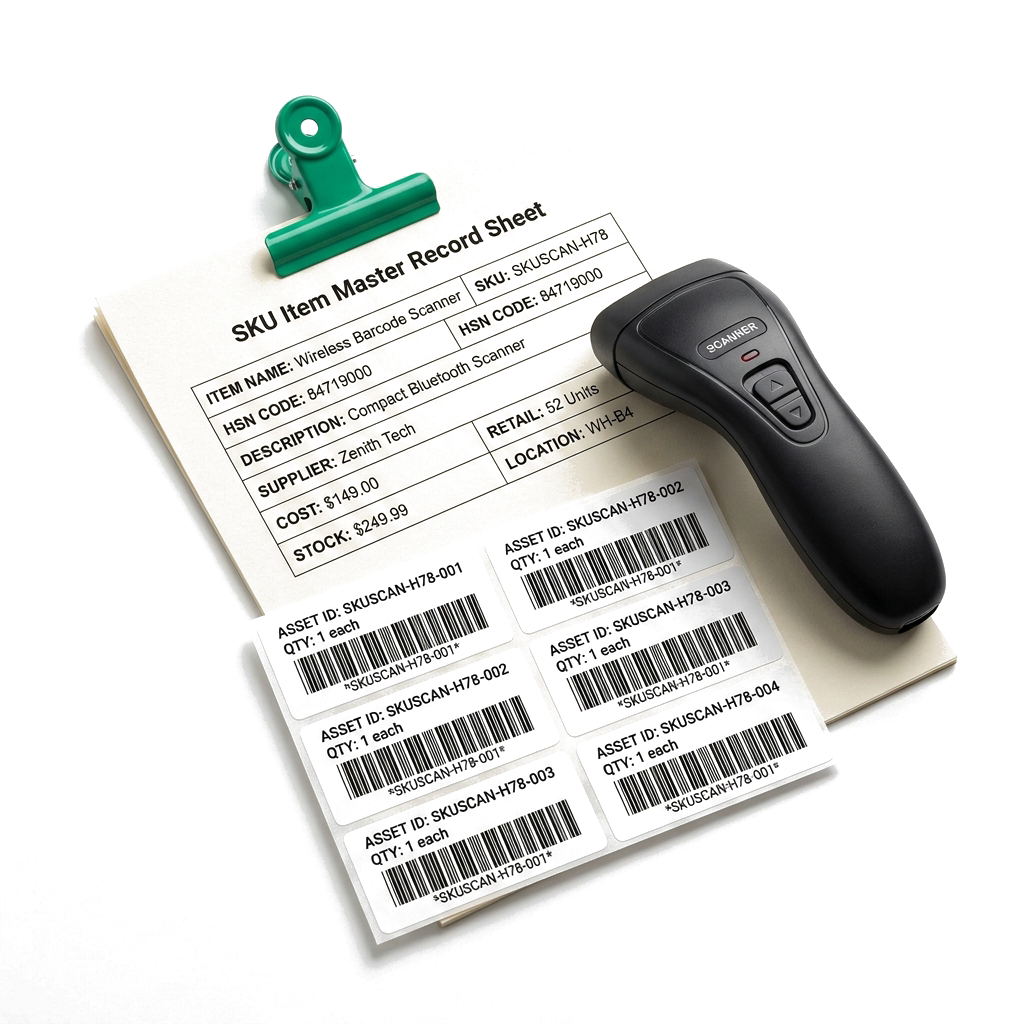
Create a dependable item record before quantities begin to move.

  • SKU, HSN, GST, cost and selling price
  • Tracked inventory or non-stock items
  • Units, purchase units and conversions
See every detail

Inventory truth lives between what is recorded and what just moved.

A stock record with a memory

Five layers of context, carried forward.

Define the record

Give every item a reliable identity.

SKU, HSN, GST, units, cost, price, tracking rules and custom fields establish what the business is actually counting.
Item masterTracked
DU
Retail display unitDSP-042 · HSN 9403

Selling price₹ 36,000

Cost₹ 24,800

GST18%

Unitpcs

BrandArcFormFinishNatural oak

Place the quantity

Split the total into locations people can act on.

Opening balances, imports and per-warehouse views show where stock sits and what that location is worth.
Warehouse position184 pcs

Bengaluru Central84

Mumbai West66

Chennai South34

Bengaluru32 in transferMumbai

Explain the change

Every movement leaves a source and a balance.

Purchases, sales, transfers, adjustments, bundles and returns become one chronological trail on the item.
Stock movementsBalance 184

+40Purchase receiptPR/0081 · Bengaluru184

-12ShipmentSHP/0063 · Bengaluru144

+32Transfer receivedTRF/0028 · Mumbai156

+28Stock adjustmentADJ/0019 · count correction184

Act before the gap

Shortage and expiry signals lead to a next step.

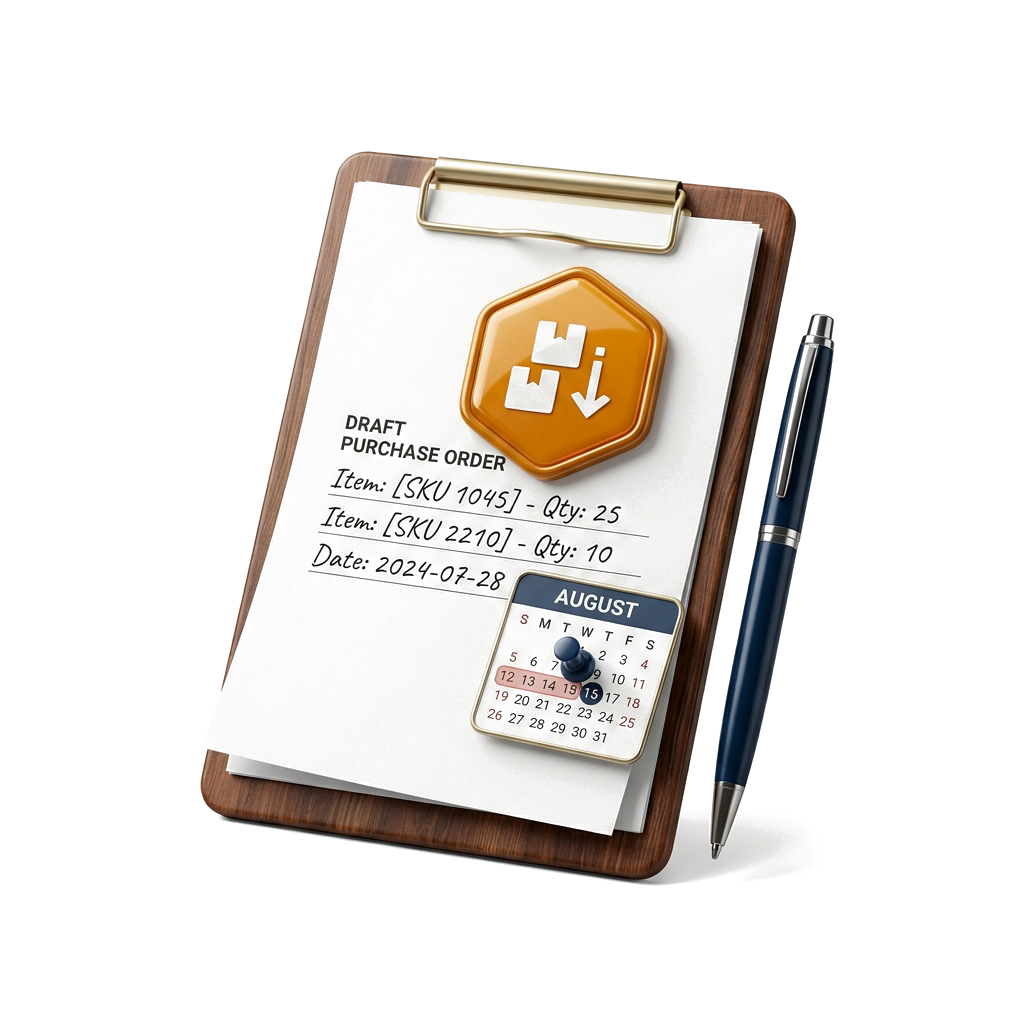
Reorder levels, preferred vendors, batch dates and draft purchase orders convert risk into work the team can finish.
Reorder suggestions3 draft POs

Items selected12

Vendors3

Est. value₹ 2.46L

Display unit8 on handOrder 24Sensor packOut of stockOrder 40

Read the position

Quantity becomes a financial inventory view.

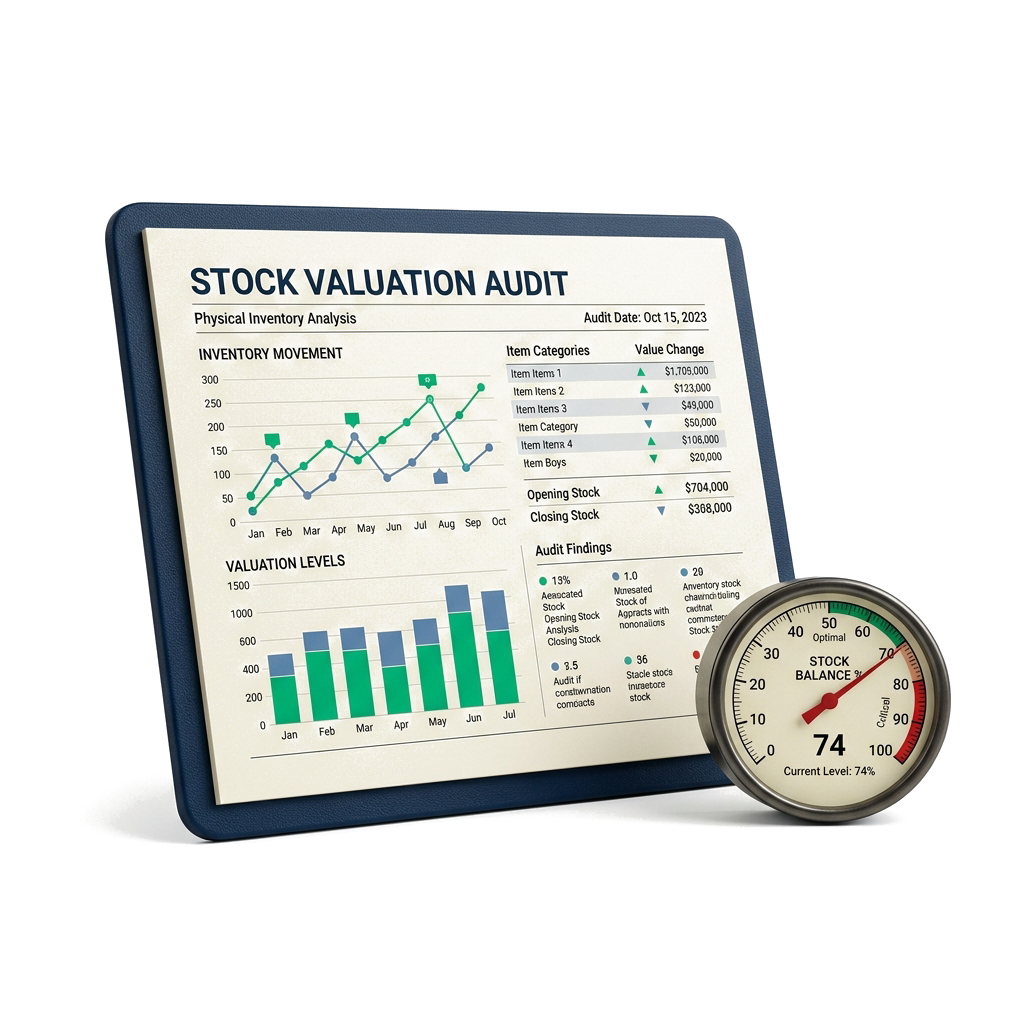
Weighted-average or FIFO value, retail potential, margin and ledger exports make the stock position explainable.
Inventory overviewUpdated now
Stock value₹ 28.4L
Retail value₹ 41.7L
On hand12,480
326tracked

Healthy 281

Low stock 31

Out of stock 14

A quantity can be healthy, urgent, moving or ageing.

The state changes the next action without changing the identity of the item.

Available

Quantity is above its reorder point.

The item stays available to sales, with its organisation-wide total and warehouse split visible.
1 / 4

Every control behind a trustworthy stock position.

Create items, position stock, explain movement, replenish shortages and value what the business holds.

Define

Create a dependable item record before quantities begin to move.

  • Create and edit items with name, SKU, barcode, category, HSN, selling price, cost and GST rate.
  • Choose whether an item tracks physical inventory, keeping non-stock items at zero stock without movement entries.
  • Maintain organisation-wide units and categories, including active status and display order.
  • Store a selling unit, purchase unit and unit-of-measure conversion on the item.
  • Set the reorder level and distribute opening stock across one or more warehouses.
  • Add active or required text, number, date, select, phone and file custom fields for item-specific information.
  • Search items by name, SKU or category, filter low-stock records, sort columns, apply added-date ranges and paginate results.
  • Respect separate permissions for viewing, creating and editing item records.

Identify

Turn item data into labels that work at a shelf, counter or warehouse bench.

  • Enter a barcode or automatically generate an internal EAN-13 code when an item is created.
  • Preview CODE-128, EAN-13, UPC-A, CODE-39 and QR symbologies.
  • Build a multi-item print queue and generate missing barcodes before printing.
  • Choose A4, Letter or thermal output with custom label dimensions, columns, offsets, margins and horizontal or vertical gaps.
  • Show, hide and reorder logo, name, price, code, SKU, unit, category, HSN and item custom fields.
  • Preview sheet or roll placement and produce a printable PDF for the requested quantities.
  • Create, update, apply and remove reusable label templates.

Locate

Know which warehouse owns the quantity, not just the organisation-wide total.

  • Create, edit and remove warehouses with permission-aware controls; warehouses holding stock are protected from unsafe deletion.
  • Review each warehouse’s item count, units stored and stock value.
  • Search, sort, date-filter and paginate the item-level quantity and value held in a warehouse.
  • Download CSV or Excel templates and bulk upload warehouse stock using SKU matching.
  • Create new items or update existing items during import, add quantities to current stock and review created, updated, units-added and row-error results.
  • Create itemised transfers between source and destination warehouses with transfer date and notes.
  • Edit or delete draft transfers, dispatch stock from the source, receive it at the destination or cancel an unreceived transfer.
  • Check sellable availability by item and warehouse from connected sales workflows.

Control

Make every manual correction explainable and every system total reconcilable.

  • Review an item’s warehouse split and chronological movement history with type, quantity, balance and source reference.
  • Increase or decrease a single tracked item against a warehouse with a reason and date.
  • Post multi-item stock adjustments against a warehouse, using signed quantities, standard reasons and notes.
  • Preview current and resulting quantities and prevent a correction from taking stock below zero.
  • Cancel a posted adjustment and reverse its stock effect while retaining the audit record.
  • Recalculate every item’s total on hand from the sum of its warehouse levels.
  • Choose whether regular invoices reduce stock immediately or wait for shipment; POS and Quick Invoice settle stock at issue.
  • Carry stock changes from purchases, sales, shipments, returns, transfers, bundles and adjustments into the shared movement trail.

Protect

Surface shortages and expiry exposure early enough to take a useful action.

  • Flag items at or below their reorder level and distinguish low stock from out of stock.
  • Publish low-stock notifications when a movement crosses the configured threshold.
  • Review paginated low-stock reporting and export the supporting data.
  • Generate reorder suggestions with on-hand quantity, reorder level, suggested quantity, cost and preferred vendor.
  • Search, filter and sort reorder candidates, adjust requested quantities and select vendors.
  • Group selected replenishment lines into one draft purchase order per vendor.
  • Enable batch tracking per item and record goods-in by batch number, expiry date, warehouse, quantity and optional unit cost.
  • See expired, due-within-30-days, due-within-90-days and units-at-risk views, with first-expiry-first-out consumption.

Compose

Represent a sellable kit as the components already sitting in inventory.

  • Choose an existing inventory item as the finished bundle and add component items with required quantities.
  • Prevent circular bundle definitions that would make component relationships unsafe.
  • Calculate how many kits can be built from current component availability across all warehouses.
  • Review each component’s on-hand quantity and how many finished units it can support.
  • Build a selected quantity in a warehouse by consuming components and increasing the finished item.
  • Unbuild a selected quantity to return component quantities and reduce the finished item.
  • Write the related component and finished-item changes into stock movement history.

Value

Read stock health, cost exposure and movement detail from the same operational records.

  • Value tracked inventory using weighted-average or FIFO cost methods.
  • Review units on hand, unit cost, cost value, selling value and potential margin by item.
  • Search, sort, date-filter and paginate valuation records with organisation-wide totals.
  • Use the inventory dashboard for item, warehouse, category, low-stock and out-of-stock counts.
  • Compare total stock cost, retail value, potential margin and total quantity on hand.
  • Inspect category value, stock-health mix, top items by stock value, reorder alerts and out-of-stock items.
  • Run the stock report and stock ledger with item and date filters, quantities, balances and source references.
  • Export stock, low-stock and stock-ledger reports for further review.

Connected to every reason stock moves.

Follow the shared item into purchasing, sales and the wider supply-chain workflow.

Before you make stock visible.

Can inventory be split across multiple warehouses?

Yes. Each tracked item can hold quantities across multiple warehouses. Warehouse views show item count, units and value, while transfers move itemised quantities through draft, dispatched, received or cancelled states.

Can I import existing stock?

Yes. Download a CSV or Excel warehouse template and upload records matched by SKU. The import can create items or update existing ones, add quantities to current stock and report created, updated, units-added and row-level error results.

How are low-stock items replenished?

Reorder suggestions combine on-hand quantity, reorder level, suggested quantity, cost and preferred vendor. You can adjust quantities and vendors, then create one draft purchase order per selected vendor.

Does Scalar360 support batches and expiry dates?

Yes. Batch tracking can be enabled per item. Goods-in records can include batch number, expiry date, warehouse, quantity and unit cost, with expired and upcoming-expiry views and first-expiry-first-out consumption.

Can I print barcode and QR labels?

Yes. The label designer supports CODE-128, EAN-13, UPC-A, CODE-39 and QR, along with A4, Letter and thermal layouts, reusable templates, item fields, custom fields and PDF output.

Which inventory valuation methods are available?

Inventory valuation supports weighted-average and FIFO views. Reports expose units, unit cost, cost value, selling value and potential margin, with stock and ledger exports for further review.

Let’s connect
your business.

Bring your workflows. We’ll show you how they fit together in Scalar360.

Book a demosales@scalar360.com